02 // SELECTED WORK // THIS WEBSITE
The
Observatory.
A portfolio designed to show the work and the thinking behind it.
This website is both a home for my engineering work and a software project of its own. I built a responsive, content-driven Next.js experience that connects systems administration, software engineering, infrastructure, and the questions that motivate the work.
A portfolio should explain more than the outcome.
A list of technologies or screenshots does not explain why a system was built, which constraints shaped it, or how an implementation changed over time. I wanted a place where those decisions could be part of the story.
The portfolio connects projects across different engineering domains without treating them as unrelated interests. Each case study centers the problem, the approach, and the evidence available so far.
Editorial storytelling. Engineering structure.
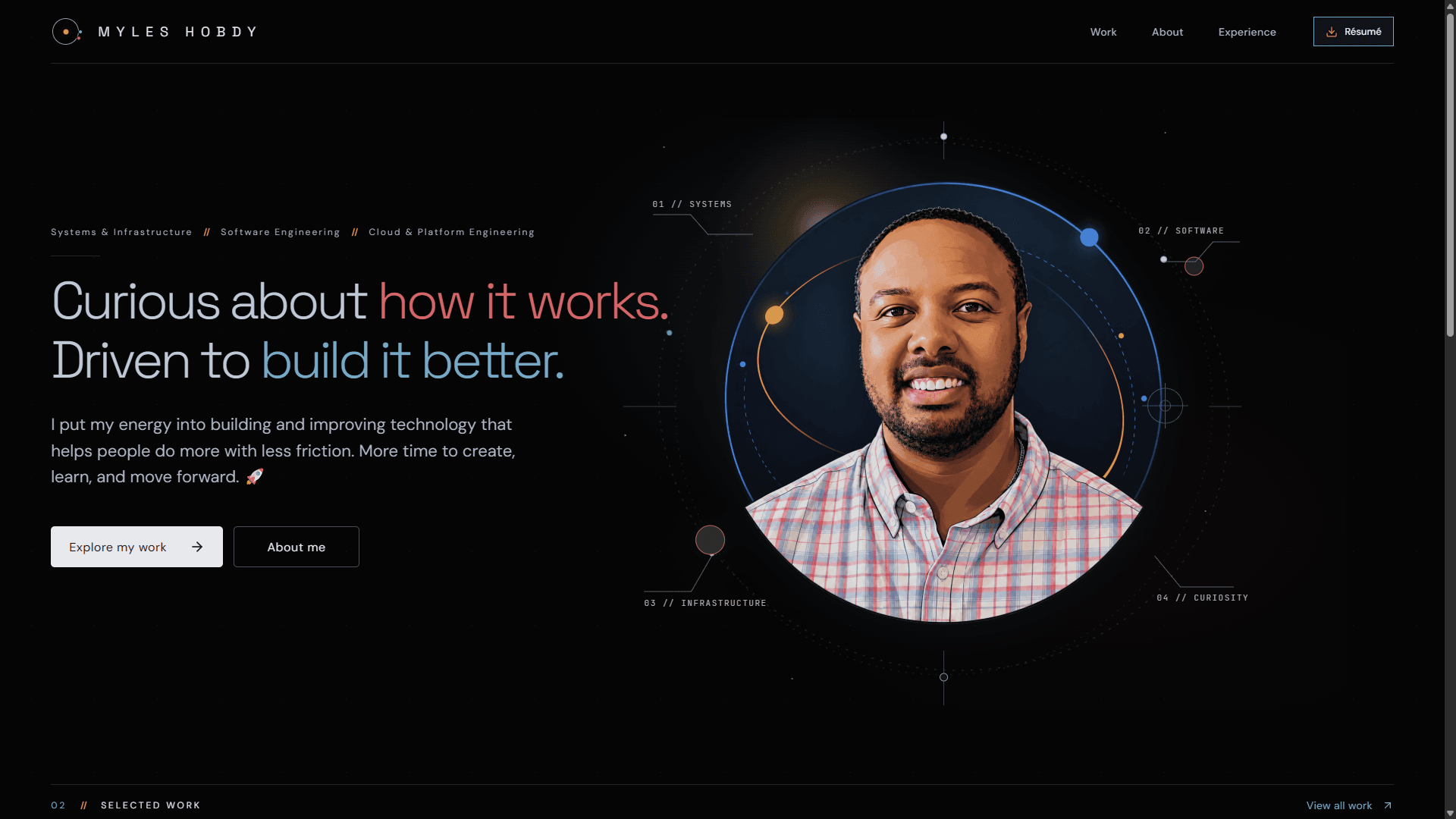
The visual direction uses a dark observatory-inspired canvas, restrained orbital graphics, technical diagrams, and readable project narratives rather than a generic project grid.
A distinct entry point.
The homepage introduces my engineering interests and routes visitors toward work, background, and experience.
Content as structured data
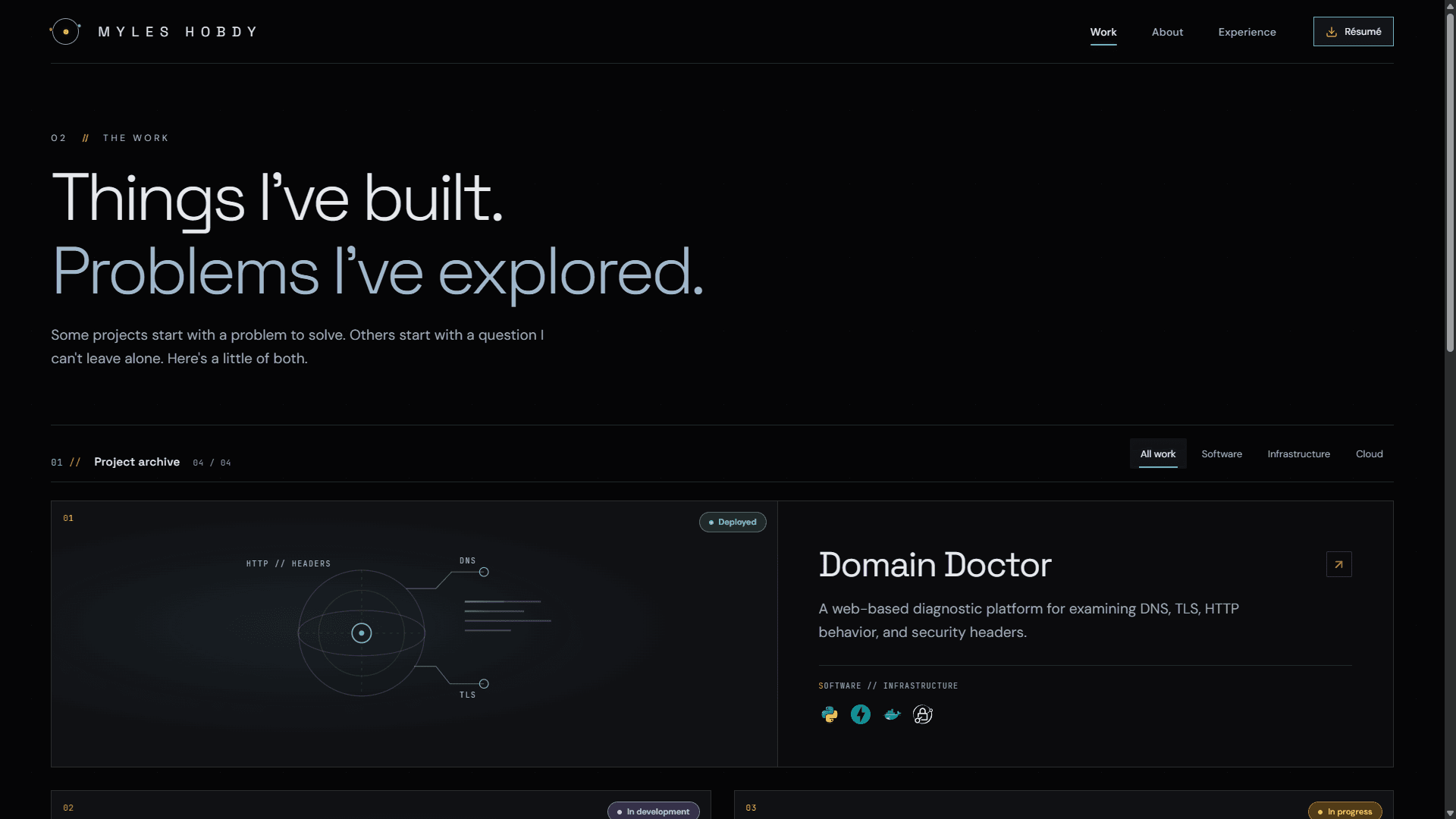
A shared project registry powers the work gallery, homepage cards, static project routes, metadata, and sitemap. Adding a project should not require manually updating every destination.
Reusable case-study patterns
Individual stories retain their own content while sharing navigation, section labels, reveal behavior, and visual language.
Responsive by design
The layouts adapt from large editorial compositions to smaller screens, with reduced-motion preferences supported in interactive elements.
Discoverability and clarity
Route metadata, a generated sitemap, robots configuration, accessible navigation, and social preview assets make the work easier to discover and navigate.
One source of truth. Many views.
The portfolio uses a small content model to connect pages and keep project discovery consistent as the work grows.
Stories with a shared structure.
Project cards use the same registry and presentation patterns while each case study can explain its own technical decisions and evidence.
Content registry
Project metadata, summaries, technologies, and internal slugs
content/site.tsNext.js App Router
Route-based pages, dynamically generated project paths, and SEO metadata
app/ · lib/seo.tsPresentation system
Reusable cards, editorial case studies, typography, interactive galleries, and diagrams
components/ · app/globals.cssPublic experience
A responsive portfolio with featured work, experience, project details, and a résumé
mylesh.devThe website is part of the engineering practice.
Make growth inexpensive. A centralized project registry keeps the selected work, archive, route generation, and sitemap in sync as new work is added.
Respect different readers. The same page should provide a useful overview to a recruiter and enough implementation detail for a technically curious visitor.
Design for change. Reusable page patterns and a dedicated case-study route make it possible to refine the visual language while keeping the existing stories intact.
Keep claims grounded. Projects in active development are described as such; design intentions are distinct from operational results.
A living record of engineering work.
The portfolio continues to evolve as projects mature, case studies gain stronger evidence, and I learn better ways to communicate technical work.